
In 2024, Americans lost nearly $250 million to scams involving digital currency kiosks. This shocking figure from the FBI is more than double the losses reported just a year prior. This dramatic surge highlights a critical and growing threat for anyone using these machines.
This guide is born from a need to protect our community in Erie. I have compiled real-world insights, law enforcement data, and expert advice to help you navigate this landscape safely. While these kiosks offer incredible convenience for buying and selling digital assets, their features also attract malicious actors.
My goal is to provide a comprehensive resource. We will cover how these machines operate, how to spot deceptive tactics, and steps for a secure transaction. Whether you are new to this technology or a seasoned user, understanding these risks is your first line of defense.
Knowledge and vigilance are your most powerful tools. Throughout this article, I will share practical strategies, including a personal checklist and information on trusted local operators.
Key Takeaways
- Financial losses from scams at digital currency kiosks have skyrocketed nationally.
- Security awareness is essential for every user, regardless of experience level.
- This guide provides actionable steps based on real data and expert recommendations.
- Understanding how these transactions work is the foundation of protecting yourself.
- Recognizing common scam tactics can prevent you from becoming a victim.
- Preparation and a cautious approach are key to a safe experience.
Introduction: Navigating the World of Bitcoin ATMs in Erie, PA
Walking through local shopping areas, I’ve noticed a quiet revolution in how residents access emerging financial technologies. These digital currency kiosks have become increasingly common fixtures in our community.
Why Bitcoin ATMs are becoming popular
The appeal of these machines lies in their remarkable convenience. They bridge the gap between physical currency and digital assets seamlessly.
Most transactions complete in under two minutes, offering immediate access. This speed attracts people seeking quick cryptocurrency acquisitions.
Strategic placement in high-traffic locations makes them easily accessible. You’ll find them in convenience stores, gas stations, and shopping centers throughout the region.
My personal journey with ATM transactions
My first experience with these bitcoin atms involved significant hesitation. The technology seemed complex initially.
Over time, I grew more comfortable while maintaining security awareness. Proper protocols made each visit successful.
The table below highlights key differences between traditional and modern financial services:
| Service Type | Access Hours | Transaction Speed | Verification Process |
|---|---|---|---|
| Traditional Banking | Limited business hours | 1-3 business days | In-person identification |
| Online Exchanges | 24/7 with internet | 10-30 minutes | Digital documentation |
| Digital Currency Kiosks | 24/7 location access | Under 2 minutes | Phone number verification |
Understanding both benefits and risks is essential for anyone considering these machines. My positive experiences came from careful preparation and vigilance.
Understanding Bitcoin ATMs and Their Basic Functions
The conversion from physical currency to digital assets happens through a surprisingly straightforward interface. These machines bridge traditional finance with emerging technologies.
I want to break down the typical process step by step. This knowledge forms your foundation for safe interactions.
How a Bitcoin ATM works
Users begin by selecting “buy” or “sell” on the touchscreen. They then enter the desired amount of currency.
The machine prompts for a digital wallet address. This unique identifier functions like an account number.
After inserting cash, the system processes the conversion. Most transactions complete within minutes.
“The irreversible nature of these transfers demands extreme caution from all participants.”
Security features vary between operators. Legitimate services implement identity verification and transaction limits.
Key features of secure cryptocurrency transactions
Reputable kiosks display fees clearly before confirmation. Some charges exceed 20% of the transaction value.
These costs are significantly higher than online exchanges. Understanding this difference helps users make informed choices.
| Transaction Type | Average Speed | Typical Fees | Reversibility |
|---|---|---|---|
| Kiosk Purchase | 2-5 minutes | 15-25% | Irreversible |
| Online Exchange | 10-30 minutes | 0.5-4% | Sometimes reversible |
| Bank Transfer | 1-3 days | Fixed fees | Often reversible |
Once cryptocurrency moves to a wallet, recovery becomes nearly impossible. This permanence attracts malicious actors.
Recognizing proper machine operation helps identify abnormalities. Your awareness serves as the best protection.
Bitcoin ATM Fraud Prevention Erie, PA: Essential Strategies
Pennsylvania authorities have issued warnings about a disturbing trend affecting our community. The Attorney General’s office confirms these schemes are growing throughout our state.
Criminals exploit the convenience of digital currency kiosks. They use high-pressure tactics to manipulate potential victims.
Recognizing common scam tactics
Most schemes begin with unexpected contact. Strangers reach out through phone calls, texts, or social media messages.
These individuals often pretend to be government officials or bank representatives. They create false urgency about legal problems or account security.
The table below shows how legitimate requests differ from fraudulent ones:
| Communication Type | Payment Method Requested | Time Pressure Applied | Verification Possibility |
|---|---|---|---|
| Legitimate Business | Standard channels | Reasonable deadlines | Easy verification process |
| Government Agency | Official payment systems | Standard procedures | Public contact information |
| Scam Attempt | Digital currency kiosks | Immediate action demanded | No verification allowed |
Building a security mindset before every transaction
Develop a habit of questioning any unexpected payment request. Genuine organizations never demand secrecy or immediate kiosk payments.
Scammers rely on panic to override normal caution. Always pause and verify before taking action.
Remember that once digital currency moves to another wallet, recovery becomes nearly impossible. This knowledge helps maintain proper caution during every interaction.
Spotting Red Flags: Identifying ATM Scam Tactics
Physical inspection before any transaction can reveal tampering that might otherwise go unnoticed. I always recommend scanning the entire machine for anything unusual.
Physical and digital tampering indicators
Look carefully around the card reader and keypad area. Criminals sometimes attach skimming devices to capture your information.
Check for small cameras positioned to record your screen interactions or wallet address entry. Any loose components or fresh adhesive residue should raise immediate concerns.
QR code displays require particular attention. Verify that the code appears integrated into the screen rather than being a sticker overlay. Scammers use fake codes to redirect funds to their own wallets.
Signs of phishing and unauthorized wallet transfers
Be extremely cautious of any unexpected phone calls directing you to these machines. Criminals often pretend to be from official organizations.
They create false urgency about account security or legal matters. Genuine businesses never demand immediate payments through these kiosks.
If someone stays on the line during your entire visit, this is a major warning sign. They aim to prevent you from seeking verification or help.
Modern machines display scam warnings on their screens. Anyone telling you to ignore these alerts is likely attempting fraud.
Remember that transactions become irreversible once completed. This permanence makes preliminary detection absolutely critical for your protection.
Preparation Steps for Secure ATM Transactions
Security begins long before you insert cash into a machine – it starts with thorough research and planning. I developed a systematic approach that transforms potential risks into controlled experiences.
This preparation process has consistently protected my investments over time. Every user should adopt similar cautious habits.
Creating a pre-transaction security checklist
My personal checklist starts with verifying wallet details. I double-check addresses before any machine interaction.
Timing visits during daylight hours in populated areas reduces vulnerability. I also inform trusted contacts about significant purchases.
Understanding fee structures and limits prevents unexpected costs. Legitimate operators clearly disclose this information upfront.
Verifying machine authenticity and operator reputation
Researching the company behind each kiosk is essential. I verify official websites and physical business addresses.
Checking consumer reviews on trusted platforms reveals real experiences. I look for complaints with consumer protection agencies.
Cross-referencing locations with operator databases confirms authorization. This simple step identifies potentially tampered devices.
Financial institutions often have protective policies worth understanding. These measures can provide additional security layers.
Coinark Bitcoin ATM Spotlight
Coinark has established itself as a trusted name in the cryptocurrency kiosk industry. Their location at 3310 Buffalo Rd in Wesleyville serves as a reliable option for area residents.
This specific machine offers comprehensive services for buying and selling digital assets. The Wesleyville spot provides convenient access throughout the day.
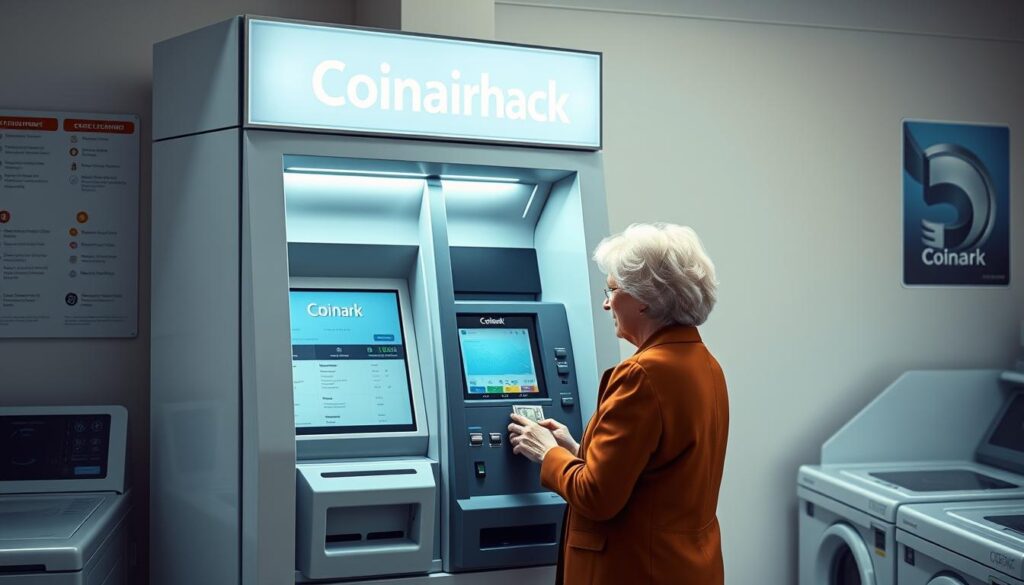
Overview of services at 3310 Buffalo Rd, Wesleyville, PA 16510
The Coinark bitcoin atm supports multiple cryptocurrencies beyond just Bitcoin. Users can access these services during regular business hours at the host location.
I found the machine well-maintained and professionally operated. The interface clearly displays all fees before any money changes hands.
Transactions proceed smoothly when following the on-screen prompts. The operator maintains this equipment to high standards.
User verification and transaction processes
Coinark implements a thorough identity verification system. This security measure protects both the company and its customers.
The process begins with phone number validation and may require additional checks. This step ensures compliance with financial regulations.
During my visit, the instructions were clear and the verification was completed quickly. Each transaction includes multiple security checkpoints.
Users should review the fee structure displayed before proceeding. These costs help maintain the machine’s security features.
When using Bitcoin ATMs like Coinark’s, personal vigilance remains essential. Always verify you’re acting independently rather than under pressure.
My Personal Experiences and Lessons Learned from ATM Scams
A chilling phone call one afternoon taught me more about digital currency scams than any article ever could. The caller, posing as my bank’s security department, claimed suspicious activity required immediate action. They insisted I move my money to a “secure government account” via a local kiosk.
This scammer created intense urgency, saying my accounts would be frozen within the hour. They stayed on the line, directing me to a gas station. I felt pressured, but a moment of clarity struck. Why would my real bank use this specific payment method?
A close call and how I avoided fraud
I hung up and called my bank directly using the number on my card. They confirmed it was a fraud attempt. This simple verification step saved me from becoming a victim. Legitimate organizations never demand secrecy or immediate payments through these machines.
This experience mirrors a harrowing case from June 2024. An 85-year-old woman, Fran Bates, received a similar call. Over two days, a scammer convinced her to withdraw over $40,000. They even arranged a car to take her to a gas station kiosk.
Practical tips derived from real-life situations
She was saved when another customer, Myndi Jordan, noticed her distress and alerted police. Lieutenant James Stewart intervened just before the final transaction. This highlights the power of community awareness.
These stories offer critical lessons for anyone using bitcoin services:
| Situation | Scammer Tactic | Proper Response |
|---|---|---|
| Unexpected contact | Creating false urgency | Pause and verify independently |
| Request for secrecy | Isolating the victim | Talk to a trusted friend or family member |
| Demand for kiosk payment | Exploiting irreversible transactions | Remember: banks never operate this way |
Never feel ashamed if you are targeted. These criminals are sophisticated. Share these stories, especially with elderly relatives, to build a community shield against these atm scams.
Community Resources and Legal Guidelines for Consumer Protection
Knowing where to turn for help is as crucial as recognizing scam tactics when dealing with digital currency transactions. Our local authorities have established robust support systems that every resident should understand.
Local law enforcement and Cyber Crime Unit support
The Erie Police Department’s Cyber Crime Unit serves as a primary resource for security guidance. Officers provide specific advice on spotting and reporting suspicious activity.
They offer workshops and online information about digital currency safety. Reporting concerns helps track patterns that protect other potential victims.
Educational initiatives and community programs
Community programs focus on financial literacy across all age groups. Senior centers and libraries host presentations specifically addressing digital currency risks.
National organizations like AARP advocate for stronger consumer protections. They push for regulations, including transaction limits, to protect people’s money.
Seventeen states have already passed legislation governing these machines. Pennsylvania continues to develop its legal framework with input from government agencies.
Victims can access support services, including financial counseling. Always document details when reporting to help authorities investigate effectively.
Future Regulations and the Evolution of Bitcoin ATM Security
Recent lawsuits against major operators signal a turning point in how government agencies approach digital currency machine oversight. I see these legal actions as catalysts for industry-wide changes that will affect both legitimate users and security measures.
Upcoming state-level regulatory changes
At least seventeen states have already passed legislation governing these machines. Pennsylvania and neighboring states are considering similar measures that would treat operators as financial service providers.
These changes include enhanced licensing requirements and mandatory fraud prevention systems. Operators may face increased penalties for non-compliance with consumer protection standards.

How new policies may impact Bitcoin ATM transactions
Lawsuits in Washington, D.C., and Iowa illustrate growing regulatory scrutiny. Authorities accused operators of facilitating fraudulent transactions while collecting substantial fees.
New regulations may require transparent fee disclosure and real-time scam detection. Transaction limits and cooling-off periods could protect consumers from impulsive decisions.
These changes might increase costs for legitimate users through compliance requirements. However, they should create a safer environment for cryptocurrency transactions.
While regulations can help protect people, personal vigilance remains essential. Fraudsters continuously adapt their tactics regardless of legal frameworks.
Conclusion
The journey through cryptocurrency security reveals one undeniable truth: knowledge transforms potential risks into manageable transactions. While these kiosks offer convenient access to digital assets, they require careful navigation.
Remember that legitimate organizations never demand immediate payments through these machines. Any such request signals a potential scam. Your personal vigilance remains the most effective defense against financial fraud.
Community awareness creates powerful protection networks. Sharing this information helps safeguard vulnerable individuals from losing their hard-earned money. Local resources stand ready to assist when concerns arise.
Understanding proper protocols empowers you to participate safely in the digital economy. With preparation and healthy skepticism, you can protect your assets while accessing innovative financial services.