
I’m writing this guide to help you navigate the two main ways to get digital currency in our city. The landscape for acquiring cryptocurrency has changed a lot. You now have clear choices between physical kiosks and internet-based platforms.
Erie has seen incredible growth in local access points. Since 2018, installations have surged by over 400%. This mirrors a national trend with more than 55,000 machines now available across the United States.
I will use the Coinark location at 2340 W Grandview Blvd as a key example. This gives us a real local point for comparison. My goal is to break down the pros and cons of each method.
We will look at cost, speed, security, and ease of use. This analysis is for everyone, from first-time buyers to experienced traders. Understanding these differences will help you make the best choice for your needs.
Key Takeaways
- Erie has experienced a major increase in physical access points for digital assets.
- This guide compares the convenience of local kiosks with the features of web-based exchanges.
- We will examine real local examples, like the Coinark machine on W Grandview Blvd.
- The comparison focuses on practical factors like transaction speed and overall cost.
- This information is valuable for both new and experienced users in the area.
- The goal is to help you select the method that best fits your personal circumstances.
My Introduction to Cryptocurrency Trading in Erie, PA
The rapid expansion of cryptocurrency infrastructure in our region first sparked my interest in exploring this emerging financial technology. Watching traditional establishments embrace new payment methods showed me how mainstream acceptance was growing.
Background of Cryptocurrency in Erie
Our city has witnessed substantial adoption of digital assets. Over 50 physical locations now offer access to various cryptocurrencies throughout the area.
This mirrors national trends where approximately 15% of Americans own some form of digital currency. That represents around 21 million people engaging with these alternative investments.
Personal Experience with Digital Finance
I began exploring both physical kiosks and web-based platforms to understand their differences. Each method offers unique advantages for different types of transactions.
Through my experience, I’ve learned that our local financial landscape provides diverse options. These cater to various user preferences from immediate transactions to comprehensive trading platforms.
| Adoption Metric | Local Level | National Level | Year |
|---|---|---|---|
| Physical Access Points | 50+ locations | 55,000+ machines | 2023 |
| Population Engagement | Growing rapidly | 15% of adults | 2023 |
| User Preference | Mixed usage | Varied by region | 2023 |
The Rise of Bitcoin ATMs in Erie, PA
I’ve documented an extraordinary expansion in local cryptocurrency infrastructure that has made digital finance accessible to diverse demographics. This growth represents a fundamental shift in how residents interact with alternative investments.
Growth Trends and Market Penetration
The number of physical cryptocurrency access points in our city has increased by over 400% since 2018. This mirrors national trends where nearly 30,200 machines now operate across the United States.
Erie specifically hosts more than 50 Bitcoin ATM locations throughout various neighborhoods. These machines appear in shopping centers, retail stores, and other high-traffic areas. The strategic placement ensures convenient access for different demographic groups.
Market penetration has reached impressive levels across multiple segments. I’ve observed that physical access points serve people who might avoid online platforms due to technical barriers. The continued expansion suggests strong local demand for these services.
| Year | Local Machines | National Total | Growth Rate |
|---|---|---|---|
| 2018 | ~10 locations | ~2,000 machines | Baseline |
| 2020 | ~25 locations | ~8,000 machines | 150% increase |
| 2023 | 50+ locations | 30,200+ machines | 400%+ growth |
Coinark Bitcoin ATM: Features and Location Insights
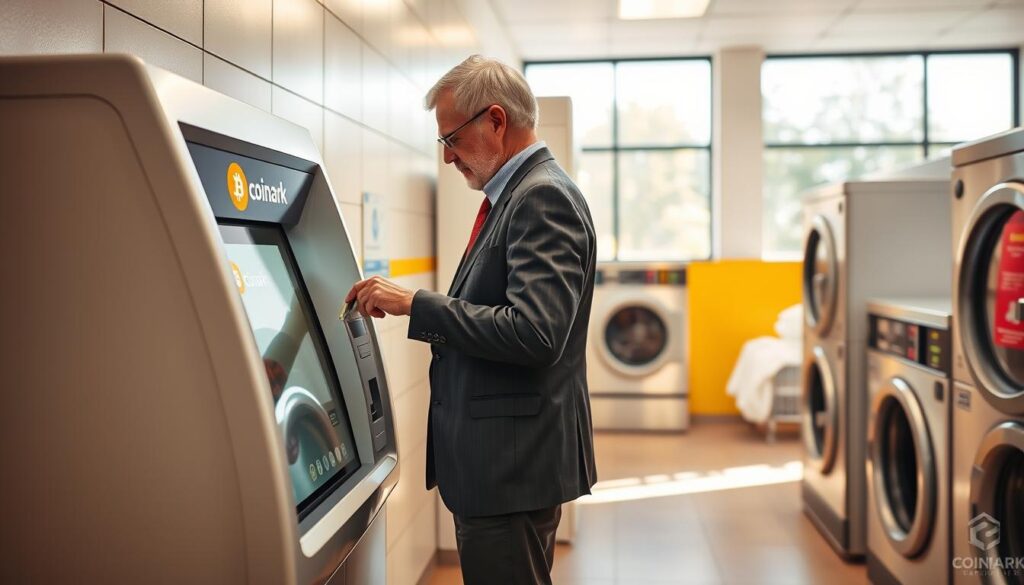
The Coinark cryptocurrency terminal represents a significant advancement in making digital assets accessible to the general public. This particular installation demonstrates how thoughtful design can enhance the user experience for both novice and experienced traders.
Key Features and Benefits
Coinark terminals offer impressive capabilities that cater to diverse user needs. The daily transaction limit reaches $25,000, accommodating everything from small purchases to substantial investments. This flexibility makes the service valuable for different types of users.
I appreciate the emphasis on speed and efficiency. Most transactions complete in under two minutes, providing quick access to digital currency. The interface guides new users through each step with clear instructions.
Security features include comprehensive monitoring and regulatory compliance. The system maintains privacy while ensuring legitimate use. Extended operating hours allow transactions outside traditional banking schedules.
| Feature | Capability | Benefit |
|---|---|---|
| Transaction Limit | Up to $25,000 daily | Accommodates various investment sizes |
| Processing Speed | Under 2 minutes | Quick access to digital assets |
| User Interface | Step-by-step guidance | Easy for first-time users |
| Availability | Extended or 24/7 hours | Flexible transaction timing |
Location Details and Accessibility
The primary Coinark location at 2340 W Grandview Blvd, Erie, PA 16506 serves the western part of the city. This strategic placement provides convenient access for residents in that area.
I found the location offers excellent visibility with practical parking considerations. The area balances accessibility with security, making it suitable for various transaction types. This ATM fills an important gap in local cryptocurrency services.
How Bitcoin ATMs Operate in Erie
Understanding the operational mechanics of cryptocurrency kiosks helps demystify the process for local users. These machines provide a straightforward pathway to digital currency acquisition.
I’ve found the system balances accessibility with necessary security protocols. The experience begins with clear on-screen instructions.
Transaction Process and Speed
The procedure at these terminals follows a logical sequence. Users first select their transaction type, then proceed through intuitive prompts.
I appreciate that most purchases complete in under two minutes. Even larger transactions typically finish within 15 minutes.
These machines accept common cash denominations including $5, $10, $20, $50, and $100 bills. The system then processes payments efficiently.
User Verification and Privacy
Verification requirements adapt based on transaction size. Smaller purchases under $900 often need only a phone number.
For larger transactions exceeding $3,000, identity verification through ID scanning becomes necessary. This complies with regulatory standards.
The machines connect directly to blockchain networks for security. Users receive confirmation through QR codes or printed receipts.
This operational model eliminates need for bank accounts or lengthy personal information. It represents a convenient alternative to traditional methods.
Online Exchanges in Erie: An Alternative Approach
Digital platforms offer residents a different path to cryptocurrency acquisition that contrasts with physical kiosks. These web-based services provide comprehensive trading environments for serious investors.
Popular Platforms and Their Offerings
Several established exchanges serve our area with distinct advantages. Coinbase, Binance, Kraken, and Gemini each offer competitive fee structures.
These platforms provide access to hundreds of digital assets beyond basic options. Users can trade numerous cryptocurrencies through sophisticated interfaces.
The offerings include advanced tools like limit orders and portfolio tracking. Margin trading capabilities appeal to experienced users seeking greater flexibility.
Security Measures and User Experience
Reputable exchanges implement robust security protocols to protect users. Two-factor authentication and encryption safeguard account access.
Cold storage solutions protect digital assets from online threats. Continuous monitoring systems detect suspicious activity promptly.
Setting up an account requires identity verification and bank linkage. This process ensures regulatory compliance but takes longer than instant kiosk access.
The comprehensive approach delivers lower fees for frequent traders. It suits investors prioritizing diverse assets and advanced tools.
Bitcoin ATM vs Online Erie, PA: Key Differences and Considerations
Residents face meaningful trade-offs when selecting between instant cash transactions and comprehensive digital platforms. Each method serves distinct needs with different cost structures and operational approaches.
Cost Structures and Fee Comparisons
Physical terminals typically charge between 8% and 24% per transaction. These higher fees compensate for the convenience of immediate service.
Web-based platforms offer significantly lower costs, often ranging from 0.5% to 4%. This makes them more economical for frequent traders.
Transaction Speed and Convenience
Local machines complete purchases in under two minutes through direct blockchain connections. This provides near-instant access to digital assets.
Online services may require several minutes to hours due to verification processes. They suit users prioritizing comprehensive features over immediacy.
Verification requirements differ substantially. Smaller transactions at physical locations need only basic information, while digital platforms require full identity confirmation.
The choice ultimately depends on whether you value speed and simplicity or cost efficiency and variety. Both options serve important roles in our local financial landscape.
Comparing Cost Structures and Fee Models
Financial planning for cryptocurrency investments requires understanding the varied fee structures across different service providers. The monetary differences between physical kiosks and digital platforms can significantly impact your overall investment returns.
I’ve analyzed the financial implications of both approaches to help you make informed decisions. The cost structures reflect the different operational models and service levels each method provides.
Fee Ranges for Physical Kiosks
Physical cryptocurrency terminals typically charge between 6% and 19% per transaction. These percentages represent a substantial portion of your investment compared to online alternatives.
The higher fees compensate for operational expenses like machine maintenance and cash handling. Rent for physical locations and regulatory compliance also contribute to these costs.
Some operators offer promotions or loyalty programs to offset the expense. However, these typically don’t match the cost-effectiveness of web-based platforms for regular traders.
For a $1,000 purchase, you might pay $60-$190 at a physical terminal versus $1-$20 online. This represents significant savings for digital platform users over time.
The choice ultimately depends on whether immediate access justifies the additional expense. Occasional users may find the convenience worth the premium, while frequent traders benefit from lower online fees.
Security and Privacy: ATMs versus Online Trading
Protecting your financial information while engaging with digital currency requires understanding the distinct security models of different acquisition methods. Each approach offers unique protections and potential vulnerabilities that affect your personal data.
Privacy Considerations for Cash Transactions
Physical kiosks provide significant privacy advantages for smaller transactions. Purchases under $900 typically require only a phone number without extensive verification.
This approach avoids bank account linking and permanent record creation. Cash transactions leave no digital financial trail that connects to your identity.
Larger transactions at these terminals require ID scanning for regulatory compliance. However, the system maintains privacy for everyday users seeking anonymity.
| Security Feature | Physical Terminals | Web Platforms |
|---|---|---|
| Identity Verification | Minimal for small amounts | Comprehensive KYC process |
| Data Storage | Minimal user information | Detailed user profiles |
| Fraud Prevention | Transaction limits, surveillance | Continuous monitoring algorithms |
| Hacking Risk | Lower due to blockchain connection | Higher due to online nature |
Online exchanges implement robust security measures including two-factor authentication and encryption. They create detailed user profiles through comprehensive verification processes.
These platforms employ cold storage solutions and insurance policies. However, they require extensive personal information sharing that some privacy-conscious individuals prefer to avoid.
The balance between security convenience and privacy protection represents a fundamental choice for digital currency users.
When using bitcoin ATMs, the direct blockchain connection reduces hacking risks. Physical security remains the primary concern rather than digital vulnerabilities.
Tips for First-Time Buyers in Erie, PA
First-time cryptocurrency buyers in our area often benefit from understanding key preparation steps before making their initial investment. Proper planning helps ensure a smooth experience whether you choose local kiosks or digital platforms.
Avoiding Common Mistakes
I’ve observed new users frequently make similar errors when they buy bitcoin. Many attempt transactions without proper preparation or understanding of fee structures.
Another common mistake involves inadequate wallet security. Losing access to your digital wallet means permanently losing your cryptocurrency investments.
Starting with smaller transactions helps familiarize yourself with the process. This approach reduces risk while you learn the technology.
Best Practices for a Successful Purchase
Establish a secure digital wallet before attempting any purchase. This fundamental step ensures you have proper storage for your assets.
Research multiple options available locally and online. Compare fee structures to find the most cost-effective way to buy sell digital currency.
Always verify you’re using legitimate services. Check reviews and confirm proper licensing before making any investments.
| Preparation Step | Common Mistake | Best Practice |
|---|---|---|
| Wallet Setup | No wallet prepared | Secure wallet before purchase |
| Transaction Size | Large first purchase | Start with small amounts |
| Fee Research | Ignoring cost differences | Compare multiple options |
| Security | Poor information storage | Multiple backup locations |
Regulatory Environment and Trading Limits in Pennsylvania
Pennsylvania’s regulatory framework establishes clear guidelines for cryptocurrency services operating within the state. The Department of Banking and Securities provides virtual currency policy statements that create legal foundations. Both physical terminals and digital platforms must follow these rules.
I’ve found that local bitcoin ATMs implement Know Your Customer and anti-money laundering protocols. Verification requirements increase with transaction size to ensure regulatory compliance. Smaller purchases need minimal information while larger trades require identity confirmation.
Trading limits at these machines typically range from $20 minimum to $25,000 maximum daily amounts. Some operators set lower caps around $15,000 depending on their risk assessment. These limits help maintain system integrity while serving diverse user needs.
Online exchanges face additional federal requirements from agencies like FinCEN. They must verify identities, maintain records, and report suspicious activities. This creates a comprehensive compliance framework protecting all participants.
The balanced approach allows innovation while ensuring consumer safeguards. Users can expect consistent verification processes across different service types. Understanding these regulations helps navigate the cryptocurrency landscape confidently.
Conclusion
My exploration of Erie’s cryptocurrency landscape reveals two distinct paths for acquiring digital assets. This comparison should help residents choose between physical kiosks and web-based platforms based on their specific needs.
The city offers numerous options, including the convenient Coinark location at 2340 W Grandview Blvd. This provides immediate access for those preferring cash transactions.
I found that physical terminals excel in speed and privacy for smaller purchases. Online exchanges offer better cost efficiency and diverse trading opportunities for serious investors.
The best way forward involves evaluating your priorities between instant access and long-term investment strategies. I recommend starting with small transactions to experience both methods firsthand.
Erie’s growing infrastructure supports varied approaches to cryptocurrency participation. Residents can confidently engage with digital assets using the method that aligns with their financial goals.