
I run a small shop and I need practical crypto tools that work on a tight schedule. I’m testing local options so I can fund wallets without waiting on bank transfers. I focus on real-world choices that match day-to-day needs for stores and vendors.
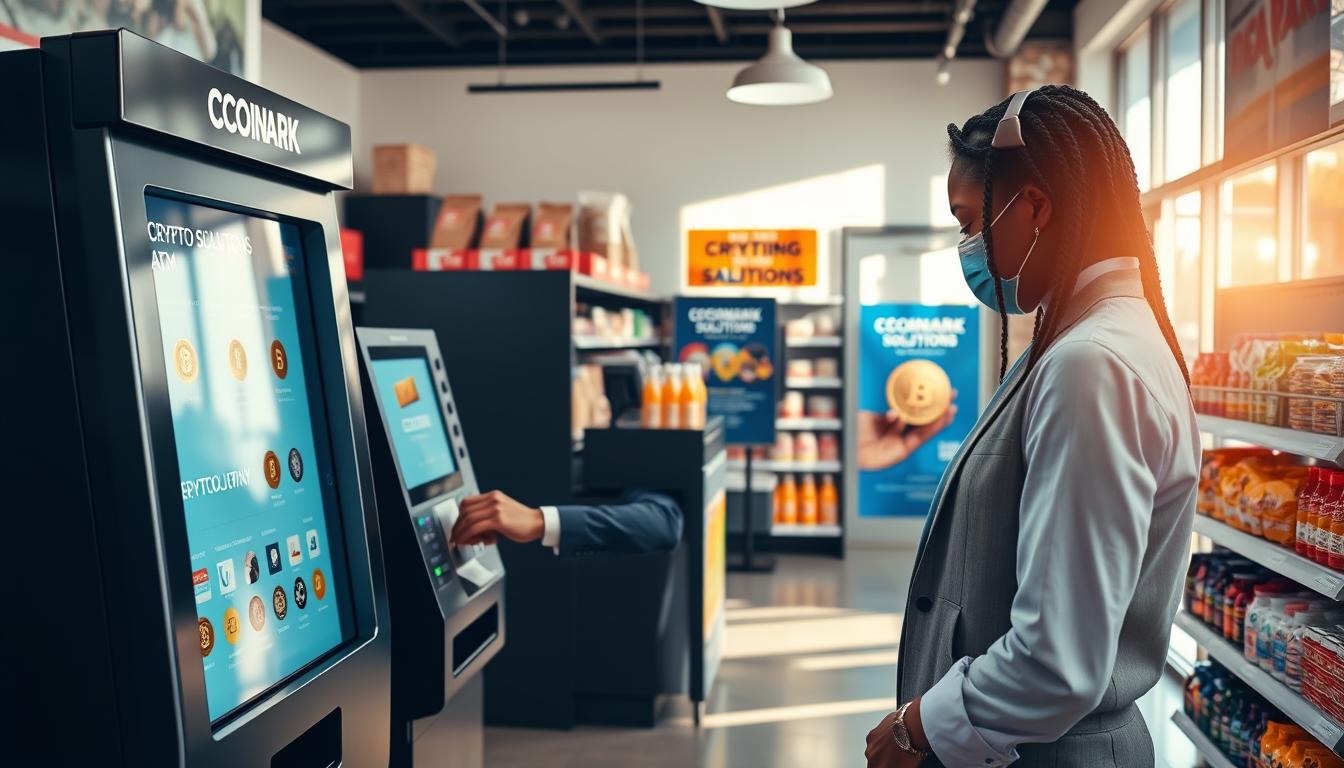
My go-to is the Coinark Bitcoin ATM at 3108 W Lake Rd, Erie, PA 16505. I use it when I have to buy bitcoin fast and keep receipts for records. The in-person option cuts delays and keeps cash flow steady.
I’ll show how I buy bitcoin, what I bring, what I type in, and what I save for bookkeeping. I also rate nearby locations by convenience, hours, and backup options so I’m not stuck when I need cash on short notice.
Key Takeaways
- I prefer quick, local crypto options for business needs.
- Coinark ATM at 3108 W Lake Rd is my fast buy point.
- I record each transaction for vendor payments and taxes.
- Location access and store hours matter as much as the machine.
- This guide reflects my workflow and aims to be actionable.
Coinark Bitcoin ATM in Erie, PA: location details for my business needs
I rely on a single, nearby Coinark machine when I need cash converted to crypto fast for the shop.
Address: 3108 W Lake Rd, Erie, PA 16505.
I use the direct directions link when I plan a quick stop: https://g.page/r/CZfZxxySCpzYEBM/.
Why this location works for me: speed, predictability, and a simple in-person purchase flow that fits between deliveries and shifts.
How I evaluate the spot before I go
- Parking: short walk from the curb so I can return to the shop fast.
- Ease of entry: a well-lit storefront and clear access save minutes.
- Transaction time: I watch how long a typical run takes so I schedule trips without interrupting sales.
I treat Coinark at 3108 W Lake Rd as my primary stop but keep a list of other ATMs erie options for backups. Having one reliable location reduces friction when I need to top up funds for same-day operations.
Next: I’ll walk through the exact on-screen flow and the info I prepare so each purchase completes smoothly.
How I use a Bitcoin ATM to buy bitcoin with cash in minutes
I keep my runs short and predictable so I can buy bitcoin quickly between shifts.
What I bring: I carry cash, my wallet QR code, and my phone for verification. I also have my phone number ready in case the kiosk asks for it.
Choosing and preparing a wallet
I pick a wallet that supports bitcoin and other coins I might need. I save the wallet address as a QR code so I can scan it at the ATM without typing long strings.
On-screen entries and account security
The machine prompts for amount, my name, phone number, and email. I create a 4-digit PIN and treat that code like a password I never share.
Completing the purchase and timing
- Insert cash, confirm the details, and choose print or email receipt for bookkeeping.
- Bitcoin cash-style transfers usually arrive in minutes, though a short wait can happen due to processing or network load.
- Quick checklist: double-check the wallet address, keep your phone nearby for codes or messages, and save the receipt.
B2B Bitcoin Services Erie Erie, PA: how I support day-to-day operations
To keep operations smooth, I top up a shop-only wallet for vendor payouts and small expenses.
Funding a wallet for vendor payments and small business expenses
I load a dedicated wallet with cash at the ATM when I need to pay suppliers the same day.
This keeps cash flow flexible and prevents delays from bank transfers.
Separating business and personal transactions in my crypto account
I never mix personal spending with store funds. I use one wallet for the shop and one for personal use.
This makes audits and reconciliations fast and less error-prone.
Recordkeeping basics: receipts, email confirmations, and internal tracking
I save printed receipts when available and archive email confirmations for each purchase.
Then I log the date, amount, vendor name, and wallet address in our internal ledger.
- I treat each crypto purchase like any other expense.
- Clear labels in the account speed monthly reviews.
- Consistent steps make repeat purchases simple to document.
| Item | Why it matters | My practice |
|---|---|---|
| Business wallet | Separates store funds from personal money | Use one wallet for vendor payments only |
| Receipts | Proof for bookkeeping and taxes | Keep printed and saved email confirmations |
| Internal log | Quick reconciliation each month | Record date, amount, vendor, and tx ID |
| Recurring workflow | Reduces mistakes and speeds operations | Follow the same steps every purchase |
What payment methods I expect: cash, debit card, and other options
My routine starts with checking whether the kiosk will take cash or a card. That saves me a wasted trip and keeps the shop running on schedule.
Cash-first reality and what “cash only” means for planning
Many ATMs in town are cash-first. When a location notes “ATM Acceptance: Cash Only” (example: 1010 State St, 1010 State St, 16501), I treat that as a hard constraint.
Cash only means no last-second card fallback at the kiosk, so I bring enough bills to complete the purchase and buy bitcoin cash when I arrive.
When card-based options matter
I use a debit card or debit transactions when I can’t carry cash or need a quick alternative. Some providers let you buy with a debit card, credit card, Apple Pay, or Google Pay online before pickup.
I weigh speed, fees, and convenience. If my goal is to buy bitcoin with cash instantly from an ATM, cash is still my first choice. For planned buys or larger amounts, card and mobile pay options are useful backups.
Transaction limits, fees, and network considerations I factor in
Before I hand cash to the kiosk I check limits, rates, and the network to avoid surprises.
Daily limit guidance: I plan around a $20 minimum and a $25,000 maximum per customer per day. That range shapes whether I do one larger run, split buys over several days, or pick an alternate method when I need more than the cap.
Fees and exchange-rate checks
I always read the on-screen fee and the exchange rate before I confirm a purchase. The kiosk shows a final estimated amount; I use that to compare cost vs. the market price. This step keeps my funding predictable and avoids hidden surprises.
Wallet and network matching
I send funds only to a wallet address that matches the crypto and the correct network. Mismatched networks can misroute funds and cost me time and money.
Practical habits that save time
- I pause and verify the QR scan or typed address for one extra minute.
- I note fees as part of the total cost of doing business.
- I prefer locations where cash-to-crypto clears in minutes and the on-screen info is clear.
Nearby bitcoin ATM locations in Erie, PA when I need a backup
I keep a short list of backup locations so I can buy crypto without disrupting a busy day at the shop.
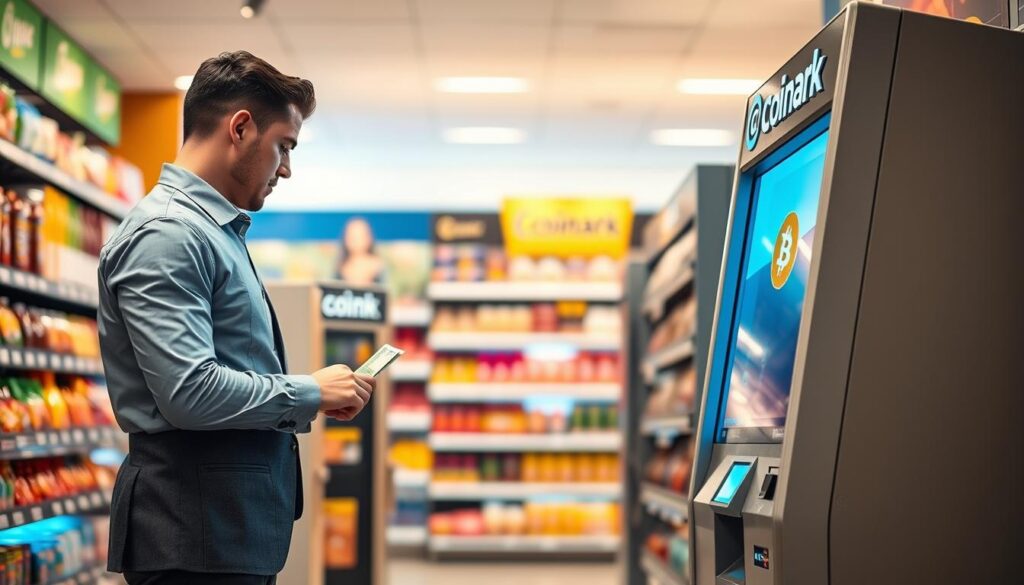
GetGo area option: 4307 Buffalo Rd, Erie, PA 16510 — open daily 6:00 a.m. to 10:00 p.m. I use that window to plan runs around deliveries. The phone number I check before I go is 678-435-9604.
Other ATMs I keep on my list
- BDCheckout examples I use: 4050 Depot Rd (16510) and 8180 Perry Hwy (16509).
- Additional bitcoin ATMs: 1655 W Bayfront Pkwy; 363 W 4th St; 3760 W 12th St; 560 E 21st St.
- More options: 2617 Peach St; 6400 Peach St; 6005 Knowledge Pkwy and others I route by traffic.
Why multiple locations matter
I keep backups so a busy kiosk or a short outage doesn’t stop me. Multiple locations shorten travel time and cut risk.
| Type | When I use it | Example |
|---|---|---|
| Walk-up kiosk | Fast buy, self-serve | GetGo 4307 Buffalo Rd |
| BDCheckout retailer | Checkout-assisted purchase | 4050 Depot Rd |
Hours, access, and on-site expectations at Erie ATM locations
I plan my runs around reliable open hours so a quick cash-to-crypto stop doesn’t derail the day. Predictable hours matter as much as distance when I schedule errands.
Example — Samir’s Convenience: 1010 State St, 16501. Hours: Monday–Sunday 6:00 AM–9:00 PM. ATM acceptance: cash only.
Why hours and access affect my real cost
An ATM that’s nearby is useless if it’s closed when I can go. I count travel time, wait time, and opening hours when I choose a location.
What I check before I leave the shop
- I confirm that the bitcoin atm is inside a well-lit store and open during my window.
- I secure cash first when a kiosk is cash only to avoid a wasted trip.
- I have my wallet QR ready so I scan quickly and don’t block the area.
On-site expectations: quick entry and exit, polite use of the space, and a ready phone. These habits speed the stop and keep my workflow steady.
Reliable access to local ATMs and consistent store hours keep my operations moving when timing is tight and cash flow matters.
Conclusion
I keep a short, repeatable routine so every cash-to-crypto stop runs smoothly and fast. Using a local ATM gives me speed, control, and a predictable in-person buy when the shop needs funds.
I rely on the Coinark bitcoin ATM at 3108 W Lake Rd, Erie, PA 16505 and the map link I use is https://g.page/r/CZfZxxySCpzYEBM/ for quick directions.
My workflow is simple: bring cash, scan my wallet address, protect my account with a PIN, and save every receipt. I always confirm the network before a purchase to avoid routing mistakes.
When I decide to buy bitcoin, I check fees and rates, plan around hours, and use backups so my crypto funding never blocks operations.